
TOPIC: A Fascinating Alternative to Phalloplasty
Re: A Fascinating Alternative to Phalloplasty
June 4th, 2024 15:40 UTC #1308717516I fully intended to post pics if I gained anything. I have my before pics, but unfortunately those are useless without growth.
I don't mean to scare anyone away from plong. I just think with the issues I had it's not worth gambling another $3k on it. From being on PE forums for the past several years, it just seems like some guys have more lymphatic issues than others when it comes to pumping. I guess I'm one of those guys. FWIW, I am Circumcised and I've read that can make you more prone to lymph issues.
Please Log in or Create an account to join the conversation.
Re: A Fascinating Alternative to Phalloplasty
June 4th, 2024 15:47 UTC #1308717517- SkeletonJelly
-

- Offline
- Pending Email Verification
-

- Posts: 20
- Thanks: 6
That said I still try to keep up with the protocol minus the expense of the prp shots. I'm not perfect about it every day but I have been doing it. My photos are still posted in this thread and I've definitely kept the gains I made in that time line.
Dr. Brandeis and his staff were wonderful when I was working with him.
Hopefully I'll continue at some point.
Please Log in or Create an account to join the conversation.
Re: A Fascinating Alternative to Phalloplasty
August 29th, 2024 00:03 UTC #1308718651I’ve gained about 1/2 Inch bpfsl in the last 6 months
So my monthly gains are about 2/3 of what they were prior to March .
Overall , I started at 8.7 bpfsl 14 months ago and am now about 10 . I started about 8.3 BPEL and am now 9 . Flaccid length is up too . Girth is unchanged between 7.5 and 8.
My protocol is 2 -3 hours of extender when I can during the day , 2 tabs of affirm morning and night . 5 mg of Cialis every other day . No pumping . I try to keep the extender force at max for the restorex, and never extend for more than 30 minutes at a time .
Please Log in or Create an account to join the conversation.
Re: A Fascinating Alternative to Phalloplasty
August 29th, 2024 18:43 UTC #1308718665Please Log in or Create an account to join the conversation.
Re: A Fascinating Alternative to Phalloplasty
August 29th, 2024 19:44 UTC #1308718666Please Log in or Create an account to join the conversation.
Re: A Fascinating Alternative to Phalloplasty
August 29th, 2024 19:46 UTC #1308718667- GrowthMindset
-
- Offline
- Pending Email Verification
-
- Posts: 85
- Thanks: 13
Please Log in or Create an account to join the conversation.
Re: A Fascinating Alternative to Phalloplasty
September 20th, 2024 23:22 UTC #1308718907I may add heat and or vibration extending if increases stall .
Please Log in or Create an account to join the conversation.
Re: A Fascinating Alternative to Phalloplasty
October 16th, 2024 06:40 UTC #1308719152- Skeptical_One
-
 Topic Author
 - Offline
- General
-

- Posts: 4985
- Thanks: 673
Also, one video (below) of a handful that will also be updated live on the
Please Log in or Create an account to join the conversation.
Re: A Fascinating Alternative to Phalloplasty
March 7th, 2025 04:56 UTC #1308720784 . I’d like to reshape but until ellanse leaves I won’t risk . I’ve stopped p-long prp . At these small gains per month , it isn’t worth the cost of prp . Still extending tho .
Overall at 10 bpfsl. 9 bpel
Please Log in or Create an account to join the conversation.
Re: A Fascinating Alternative to Phalloplasty
March 7th, 2025 20:06 UTC #1308720791Please Log in or Create an account to join the conversation.
Re: A Fascinating Alternative to Phalloplasty
March 7th, 2025 21:36 UTC #1308720792Re: A Fascinating Alternative to Phalloplasty
November 19th, 2025 22:00 UTC #1308723660It will be almost 3 years since P-Long became public - do you have any long term patients and could you share any data about their results? In the original study, the patients saw mean increase in length of around 13%... did any of the long term patients go beyond that? Above 20%? Do you have any novel interventions that could aid in the process like antifibriotic agents (Pentoxifylline for example), hyperthermic therapy (heat pad) etc that you heard about and think they have validity and/or potential behind them?
Thank you for all the work you do and share with us.
Please Log in or Create an account to join the conversation.
Re: A Fascinating Alternative to Phalloplasty
November 21st, 2025 19:56 UTC #1308723674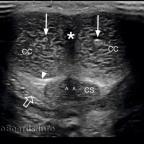
The good thing is that I have feedback from dozens of offices that their results are similar to the results we get at BrandeisMD. 1 clinic in Florida reported to me that they have done almost 100 cases and 98% of men had growth and were satisfied with their results.
The other really good thing is that I have not had any reports of any complications or side effects of the P long protocol. I will ask other P-Long providers to weigh in on this post.
Please Log in or Create an account to join the conversation.
Re: A Fascinating Alternative to Phalloplasty
April 24th, 2026 17:15 UTC #1308724980- eccebombolo
-
- Offline
- Pending Email Verification
-
- Posts: 7
- Thanks: 0
Dr. Brandeis,
Thank you for sharing the P-Long study and for your active presence in this community. I have a question that I believe is central to evaluating the biological plausibility of the protocol's length results.
The tunica albuginea is a dense fibrous structure composed primarily of Type I and III collagen with a tensile strength comparable to tendon tissue. In healthy men, it functions as a rigid hydraulic chamber — not a growing tissue. The existing literature on penile traction (including the RestoreX RCT you cite) demonstrates gains specifically in the context of Peyronie's disease, where pathological fibrotic plaques respond differently to mechanical load than normal tunica.
My question is: what is the proposed mechanism by which the P-Long protocol induces measurable, permanent elongation of the tunica albuginea in anatomically normal men?
Specifically:
1. Does PRP act directly on tunica fibroblasts, and if so, how do you account for the pro-fibrotic effects of TGF-β1 — a major PRP component — which could theoretically increase tunica stiffness rather than compliance?
2. Were any histological or imaging assessments (e.g., ultrasound elastography) performed to document structural changes in the tunica pre- and post-treatment?
3. Given that erect length measurements were taken via at-home photography without observer blinding, how was measurement variability controlled — particularly the well-documented effect of optimization bias over repeated self-measurement sessions?
The study itself acknowledges the absence of a control group and the non-standard measurement methodology. Without a mechanistic explanation for tunica remodeling in healthy tissue, the length gains remain difficult to attribute to structural change rather than measurement variance or improved tumescence.
I would genuinely appreciate your thoughts on this, as it seems to be the key unanswered question in the literature.
Thank you.
Please Log in or Create an account to join the conversation.
Re: A Fascinating Alternative to Phalloplasty
May 15th, 2026 11:36 UTC #1308725088- Skeptical_One
- Topic Author
- Offline
- General
-
- Posts: 4985
- Thanks: 673
Scan the QR code below and join Dr. Brandeis and Dr. Gabal (both esteemed Urologists in the area of Sexual Medicine) as they discuss the developments of P-Long, share real patient cases and photos. The event is both virtual and private, so those who prefer some degree of anonymity will appreciate this opportunity! Those who have been waiting patiently for updates got their wish, and I hope this is a constructive learning experience for all participants!

Read More (PDF Brochure)
Please Log in or Create an account to join the conversation.